
Remembrance 43 from Chapter 153
the adkhār of pilgrimage (ḥajj)
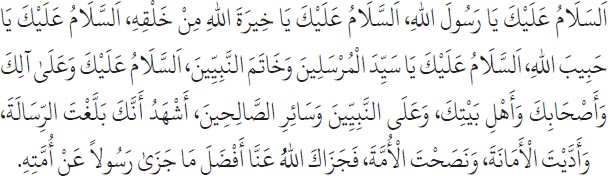
As-salāmu ‘alayka yā Rasūla-llāh, as-salāmu ‘alayka yā Khīrata-llāh min khalqih, as-salāmu ‘alayka yā Ḥabība-llāh, as-salāmu ‘alayka yā Sayyida-l-Mursalīna wa Khātama-n-Nabiyyīn, as-salāmu ‘alayka wa ‘alā ālika wa aṣḥābika wa ahli Baytik, wa ‘ala-n-Nabiyyīna wa sā’iri-ṣ-ṣāliḥīn. Ashhadu annaka ballaghta-r-risālata wa adayta-l-amānata wa naṣaḥta-l-Ummah, fa-jazāka-llāhu ‘annā afḍala mā jazā Rasūlan ‘an Ummatih.
When a person wants to enter the Mosque, it is mustaḥabb to say what is said upon entering other mosques, and we have already presented that in the beginning of the book. When he has performed the ṣalāh of greeting the Mosque, he should go to the Noble Tomb and face it with his back to the qiblah, standing about four cubits away from the wall of the grave. He should give greetings, without raising his voice, and say: Peace be upon you, Messenger of Allah; peace be upon you, Best of the Creation of Allah; peace be upon you, Beloved of Allah; peace be upon you, Master of the Messengers and Seal of the Prophets. Peace be upon you, your Family, your Companions, your Household, the Prophets, and all of the pious. I bear witness that you conveyed the Message, that you fulfilled the Trust, and that you advised the Ummah. May Allah give you the finest reward that He has ever given a Prophet on behalf of his Ummah. [16].