
Chapter 176
Remembrance 1 from Chapter 176
Arabic
Romanisation
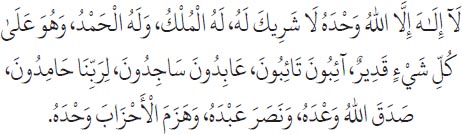
Lā ilāha illa-llāhu waḥdahu lā sharīka lah, lahu-l-mulk, wa lahu-l-ḥamd, wa Huwa ‘alā kulli shay’in qadīr. Ā’ibūnā tā’ibūn, ‘ābidūna sājidūn, li-Rabbinā ḥāmidūn. Ṣadaqa-llāhu wa‘dah, wa naṣara ‘abdah, wa hazama-l-aḥzāba waḥdah.
Context
I say that awfā, ‘climbed’, means irtafa‘a, ‘he ascended over’, and fadfad, with a fatḥah on both fā’s and in between them a dāl with a sukūn and at the end another dāl, means ‘elevated rugged land’; but some say ‘waterless desert in which there is nothing’, and others say ‘elevated rugged land with pebbles’ and yet others say ‘rugged high ground’.