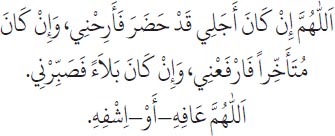
Allāhumma in kāna ajalī qad ḥaḍara fa-ariḥnī, wa in kāna muta’akhkhiran fā-rfa‘nī, wa in kāna balā’an fa-ṣabbirnī. Allāhumma ‘āfih (or) ishfih.
Context
We relate in the book of at-Tirmidhī from ‘Alī who reported: “Once I had a complaint and the Messenger of Allah passed by me while I was saying: ‘O Allah, if it be that my time has come then give me relief, and if it is delayed then elevate me, and if it is a test then grant me patience.’ The Messenger of Allah asked: ‘What did you say?’ I repeated what I had said. He prodded me with his foot and said: ‘O Allah, grant him health’ or ‘heal him’—Shu‘bah was in doubt [as to which of the two wordings was used]. I never complained about any pain after that.” [9].According to at-Tirmidhī, this hadith is ḥasan ṣaḥīḥ.

 who reported: “Once I had a complaint and the Messenger of Allah
  passed by me while I was saying: ‘O Allah, if it be that my time has come then give me relief, and if it is delayed then elevate me, and if it is a test then grant me patience.’ The Messenger of Allah