
Remembrance 41 from Chapter 153
the adkhār of pilgrimage (ḥajj)
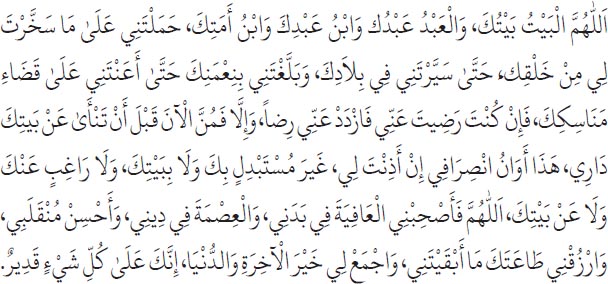
Allāhumma-l-Baytu Baytuk, wa-l-‘abdu ‘abduka wa-bnu ‘abdika wa-bna amatik. Ḥamaltanī ‘alā mā sakhkharta lī min khalqika ḥattā sayyartanī fī bilādik, wa balaghtanī bi-ni‘matika ḥattā a‘antanī ‘alā qaḍā’i manāsikik, fa-in kunta raḍīta ‘annī fā-zdad ‘annī riḍā, wa illā fa munna-l-āna qabla an tan’ā ‘an baytika dārī. Hādhā awānu-nṣirāfī in adhinta lī, ghayra mustabdilin bika wa lā bi-Baytik, wa lā rāghibin ‘anka wa lā ‘an Baytik. Allāhumma fa-aṣḥibni-l-‘āfiyata fī badanī, wa-l-‘iṣmata fī dīnī, wa aḥsin munqalabī, wa-rzuqnī ṭā‘ataka mā abqaytanī, wa-jma‘ lī khayra-l-ākhirati wa-d-dunyā, innaka ‘alā kulli shay’in qadīr.
When the pilgrim intends to leave Makkah to return home, he should perform the ṭawāf of greeting, then go to the Multazam and cling to it. Then he should say: O Allah, the House is Your House and this is Your slave and the son of Your male slave and the son of Your female slave. You have conveyed me upon one of Your creatures, which You have subjugated so that You may make me move about in Your land. You have made me arrive, by Your grace, so that I may fulfil Your rituals. If You are pleased with me, be more pleased with me. If not, then [be so] from now on, before my home makes me distant from Your House. This is the time of my departure, if You give me permission—not wishing to substitute You or Your House [for anything else], and not out of aversion to You or Your House. O Allah, accompany me with good health in my body and protection of my religion. Make my return good, and grant me obedience to You for as long as You let me live. Accumulate for me my benefit in the Hereafter and this world. You have power over all things. [15].