
AFTER COMPLETING THE adhkār of standing, one should pronounce takbīr and go down into sujūd, prolonging the takbīr until he places his forehead on the ground. We have already mentioned the ruling that this takbīr is Sunnah, and that if one leaves it out his ṣalāh will not be invalidated and he does not have to prostrate for forgetfulness. When he prostrates, he should utter the adhkār of sujūd, of which there are many:
Such as that which we have related in the Ṣaḥīḥ of Muslim from the preceding narration of Ḥudhayfah  about rukū‘ in the description of the ṣalāh of the Messenger of Allah
  when he recited the chapters al-Baqarah and Āl ‘Imrān in a single rak‘ah. He did not come to any verse about mercy without asking for it and he did not come to any verse of punishment without seeking protection from it. Then he performed sujūd and said “Glory be to my Lord, the Most High.” His sujūd was close to his standing [in duration]. [1].
about rukū‘ in the description of the ṣalāh of the Messenger of Allah when he recited the chapters al-Baqarah and Āl ‘Imrān in a single rak‘ah. He did not come to any verse about mercy without asking for it and he did not come to any verse of punishment without seeking protection from it. Then he performed sujūd and said “Glory be to my Lord, the Most High.” His sujūd was close to his standing [in duration]. [1].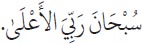
Subḥāna Rabbiya-l-A‘lā.
We relate in the Ṣaḥīḥs of al-Bukhārī and Muslim that ‘Ā’ishah  reported that the Messenger of Allah used to say in his rukū‘ and sujūd: “Glory be to You, Allah our Lord, and to You be all praise. O Allah, forgive me.” [2].
reported that the Messenger of Allah used to say in his rukū‘ and sujūd: “Glory be to You, Allah our Lord, and to You be all praise. O Allah, forgive me.” [2].
Subḥānaka-llāhumma Rabbanā wa bi-ḥamdik, Allāhumma-ghfir lī.
We relate from the Ṣaḥīḥs of al-Bukhārī and Muslim that according to ‘Ā’ishah , the Messenger of Allah used to say in his rukū‘ and sujūd: “Most Glorious and Most Holy, Lord of the angels and the spirit.” [3].
, the Messenger of Allah used to say in his rukū‘ and sujūd: “Most Glorious and Most Holy, Lord of the angels and the spirit.” [3].
Subūḥun Quddūsun, Rabbu-l-malā’ikati wa-r-rūḥ.
We relate in the Ṣaḥīḥ of Muslim as well as from ‘Alī that when the Messenger of Allah prostrated he said in his sujūd: “O Allah, to You have I prostrated and in You I believe and to You I submit. My face has prostrated to the One Who created and shaped it and formed my hearing and sight. Blessed is Allah, the Best of Creators.” [4].
that when the Messenger of Allah prostrated he said in his sujūd: “O Allah, to You have I prostrated and in You I believe and to You I submit. My face has prostrated to the One Who created and shaped it and formed my hearing and sight. Blessed is Allah, the Best of Creators.” [4].
Allāhumma laka sajadt, wa bika āmant, wa laka aslamt, sajada wajhī li-lladhī khalaqahu fa-ṣawwarah, wa shaqqa sam‘ahu wa baṣarah, fa-tabāraka-llāhu Aḥsanu-l-Khāliqīn.
We relate a ṣaḥīḥ hadith from the Sunan books mentioned previously that ‘Awf ibn Mālik reported that the Messenger of Allah made his rukū‘ long and said in it: “Glory be to the Owner of might, dominion, grandeur and immensity.” Then he said the same in his sujūd. [5].
reported that the Messenger of Allah made his rukū‘ long and said in it: “Glory be to the Owner of might, dominion, grandeur and immensity.” Then he said the same in his sujūd. [5].
Subḥāna Dhi-l-jabarūti wa-l-malakūti wa-l-kibriyā’i wa-l-‘aẓamah.
In the Sunans it is reported that the Messenger of Allah said: “When any of you prostrates, let him say: Glory be to my Lord, Most High thrice; and that is the least [he should do].” [6].
said: “When any of you prostrates, let him say: Glory be to my Lord, Most High thrice; and that is the least [he should do].” [6].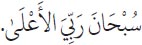
Subḥāna Rabbiya-l-A‘lā.
And we relate from the Ṣaḥīḥ of Muslim that ‘Ā’ishah said: “One night, I could not see the Messenger of Allah , so I searched for him. He was performing rukū‘ or sujūd and saying: ‘Glory be to You and to You be praise. There is no god but You.’”
said: “One night, I could not see the Messenger of Allah , so I searched for him. He was performing rukū‘ or sujūd and saying: ‘Glory be to You and to You be praise. There is no god but You.’”
Subḥānaka wa bi-ḥamdik, lā ilāha illā Ant.
According to a report in Muslim, [‘Ā’ishah said]: “I laid my hands on the soles of his outstretched feet whilst he was in the mosque. He was saying: ‘O Allah, I seek protection in Your pleasure from Your wrath and in Your forgiveness from Your punishment. I seek protection from You through You. I cannot enumerate Your praise. You are as You have praised Yourself.’” [7].
said]: “I laid my hands on the soles of his outstretched feet whilst he was in the mosque. He was saying: ‘O Allah, I seek protection in Your pleasure from Your wrath and in Your forgiveness from Your punishment. I seek protection from You through You. I cannot enumerate Your praise. You are as You have praised Yourself.’” [7].
Allāhumma innī a‘ūdhu bi-riḍāka min sakhaṭik, wa a‘ūdhu bi-mu‘āfātika min ‘uqūbatik, wa a‘ūdhu bika mink. Lā uḥṣī thanā’an ‘alayk. Anta kamā athnayta ‘alā nafsik.
We relate in the Ṣaḥīḥ of Muslim that Ibn ‘Abbās reported that the Messenger of Allah said: “As for the rukū‘, magnify the Lord in it and as for the sujūd, exert yourself in du‘ā’, for it is most likely (qaman) to be accepted.” [8].
reported that the Messenger of Allah said: “As for the rukū‘, magnify the Lord in it and as for the sujūd, exert yourself in du‘ā’, for it is most likely (qaman) to be accepted.” [8].One says ‘qaman’ with fatḥah or [‘qamin’ with] kasrah on the letter mīm. One may also pronounce it ‘qamīn’. Its meaning is ‘deserving’ or ‘worthy’.
We relate in the Ṣaḥīḥ of Muslim that Abū Hurayrah reported that the Messenger of Allah said: “The closest that the slave can be to his Lord is when he is prostrating, so make abundant supplication.” [9].
reported that the Messenger of Allah said: “The closest that the slave can be to his Lord is when he is prostrating, so make abundant supplication.” [9].And we relate from Abū Hurayrah that the Messenger of Allah used to say in his sujūd: “O Allah, forgive me my sins, the minor and the major thereof, the first and the last thereof, the open and the hidden thereof.” [10].The words diqqahu and jillahu (with the kasrah on the first part) mean ‘little’ and ‘much’.
that the Messenger of Allah used to say in his sujūd: “O Allah, forgive me my sins, the minor and the major thereof, the first and the last thereof, the open and the hidden thereof.” [10].The words diqqahu and jillahu (with the kasrah on the first part) mean ‘little’ and ‘much’.
Allāhumma-ghfir lī dhanbī kullah, diqqahu wa jillah, wa awwalahu wa ākhirah, wa ‘alāniyatahu wa sirrah.
Know that it is mustaḥabb to combine in sujūd all that we have mentioned. If one is not able to utter them all at once, he should utter them at different times, as we have stated in the previous chapters. If one shortens this dhikr, he should shorten it to tasbīḥ and a little du‘ā’. He should first utter the tasbīḥ. The ruling about recitation of the Qur’ān is the same as that which we have mentioned about rukū‘.
The ‘ulamā’ disagree as to whether sujūd is better than standing in ṣalāh. Ash-Shāfi‘ī and those who agree with him say that standing is better, because of the saying of the Messenger of Allah : “The best ṣalāh is that in which the worshipper stands for a long while.” This is because the dhikr of standing is the Qur’ān and the dhikr of sujūd is tasbīḥ; and the Qur’ān is superior. That which is lengthened is better.
: “The best ṣalāh is that in which the worshipper stands for a long while.” This is because the dhikr of standing is the Qur’ān and the dhikr of sujūd is tasbīḥ; and the Qur’ān is superior. That which is lengthened is better.Some of the ‘ulamā’ are of the opinion that sujūd is better, because of the saying of the Messenger of Allah in the hadith mentioned earlier: “The closest that the slave can be to his Lord is when he is prostrating.”
in the hadith mentioned earlier: “The closest that the slave can be to his Lord is when he is prostrating.”Imam Abū ‘Īsā at-Tirmidhī says in his book: “On this point, some of the people of knowledge have said that prolonging the standing in the prayer is better than a great many rukū‘s and sujūds. Others have said that a great many rukū‘s and sujūds are both better than prolonging the qiyām (standing). Aḥmad ibn Ḥanbal said that two hadiths have been narrated from the Prophet on this matter. Ibn Ḥanbal did not give his ruling on it. Isḥāq said: ‘During the day, many rukū‘s and sujūds are preferable; but at night, prolonging the qiyām is preferable, except if there is a part of the night that one completes, in which case many rukū‘s and sujūds in this regard are preferable, in my view, because one has completed his portion and has gained the reward for doing many many rukū‘s and sujūds.’”
on this matter. Ibn Ḥanbal did not give his ruling on it. Isḥāq said: ‘During the day, many rukū‘s and sujūds are preferable; but at night, prolonging the qiyām is preferable, except if there is a part of the night that one completes, in which case many rukū‘s and sujūds in this regard are preferable, in my view, because one has completed his portion and has gained the reward for doing many many rukū‘s and sujūds.’”According to at-Tirmidhī, Isḥāq only said this because the Prophet’s prayer at night was described as ‘prolonging the qiyām’.
prayer at night was described as ‘prolonging the qiyām’.As for prolonging the qiyām during the day, he has not been described as doing this in his prayer as he did in the night.
has not been described as doing this in his prayer as he did in the night.When one prostrates during recitation of the Qur’ān, it is mustaḥabb to say in sujūd what we have mentioned about the sujūd for ṣalāh. It is mustaḥabb to say with it: O Allah, make it a treasure for me in Your keeping, magnify my reward for it with You, remove from me my sins because of it, and accept it from me as You accepted it from Dāwūd, upon him be peace.
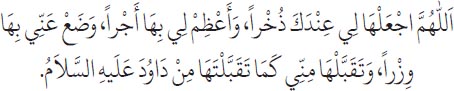
Allāhumma-j‘alhā lī ‘indaka dhukhrā, wa a‘ẓim lī bi-hā ajrā, wa ḍa‘ ‘annī bi-hā wizrā, wa taqabbalhā minnī kamā taqabbaltahā min Dāwūd ‘alayhi-s-salam.
Ash-Shāfi‘ī held that it is also mustaḥabb to say: “Glory to our Lord! Truly the promise of our Lord is ever fulfilled.” [11].

Subḥāna Rabbinā in kāna wa‘du Rabbinā la-maf‘ūlā.
We relate in the Sunans of Abū Dāwūd, at-Tirmidhī and an-Nasā’ī that ‘Ā’ishah reported that the Messenger of Allah used to say in sujūd when reciting Qur’ān: “My face has prostrated to the One Who created it and formed its hearing and sight by His Might and His Power.” [12].At-Tirmidhī said this is a ṣaḥīḥ hadith. Al-Ḥākim added: ‘Tabāraka-llāhu Aḥsanu-l-Khāliqīn’ (blessed be Allah, the Best of Creators) and said that this addition complies with the qualifications of both Ṣaḥīḥs.
reported that the Messenger of Allah used to say in sujūd when reciting Qur’ān: “My face has prostrated to the One Who created it and formed its hearing and sight by His Might and His Power.” [12].At-Tirmidhī said this is a ṣaḥīḥ hadith. Al-Ḥākim added: ‘Tabāraka-llāhu Aḥsanu-l-Khāliqīn’ (blessed be Allah, the Best of Creators) and said that this addition complies with the qualifications of both Ṣaḥīḥs.
Sajada wajhī li-lladhī khalaqah, wa shaqqa sam‘ahu wa baṣarahu bi-ḥawlihi wa quwwatih.
Al-Ḥākim adds: “So blessed is Allah, the Best of Creators.” [13].

Fa-tabāraka-llāhu Aḥsanu-l-Khāliqīn.
His words ‘O Allah, make it a treasure from me to You. . .’ are narrated by at-Tirmidhī in marfū‘ form from Ibn ‘Abbās with a ḥasan isnād. According to al-Ḥākim, this hadith is ṣaḥīḥ. And Allah knows best.
with a ḥasan isnād. According to al-Ḥākim, this hadith is ṣaḥīḥ. And Allah knows best.References
[1] Muslim (772).
[2] Al-Bukhārī (794) Muslim (484).
[3] Muslim (487).
[4] Muslim (771), Abū Dāwūd (760), at-Tirmidhī (3417), an-Nasā’ī (2/130).
[5] Abū Dāwūd (873), an-Nasā’ī (2/191), and at-Tirmidhī.
[6] Abū Dāwūd (886), at-Tirmidhī (261), and Ibn Mājah (890), from ‘Abdullāh ibn Mas‘ūd. At-Tirmidhī states that this is the practice of the people of knowledge, and that they regard it as advisable that a person say no less than three tasbīḥāt each in rukū‘ and sujūd.
[7] Muslim (486), al-Muwaṭṭa’ (1/214), Abū Dāwūd (879), at-Tirmidhī (3491), and an-Nasā’ī (2/225).
[8] Muslim (479), Abū Dāwūd (876), and an-Nasā’ī (2/189).
[9] Muslim (482).
[10] Muslim (483) and Abū Dāwūd (878).
[11] Qur’ān 17:108.
[12] Abū Dāwūd (1414), at-Tirmidhī (580), an-Nasā’ī (2/222), and al-Ḥākim in al-Mustadrak (1/220), who grades it as ṣaḥīḥ, and adh-Dhahabī agrees.
[13] Qur’ān 23:14.