
IT IS ESSENTIAL to repeat many times the du‘ā’ for difficulty that we mentioned earlier.
We relate in the book of Ibn as-Sunnī that Fāṭimah  narrated that when her time for delivery approached, the Messenger of Allah
  told Umm Salamah and Zaynab bint Jaḥsh to recite the Verse of the Throne:
narrated that when her time for delivery approached, the Messenger of Allah told Umm Salamah and Zaynab bint Jaḥsh to recite the Verse of the Throne:“Allah! There is no god but He, the Living, the Self-Subsisting, Supporter of all. No slumber can seize Him, nor sleep. His are all things in the heavens and on the earth. Who can intercede in His presence except as He permits? He knows what is before and what is behind them; nor shall they compass aught of His knowledge except as He wills. His Throne extends over the heavens and the earth, and He feels no fatigue in preserving them, for He is the Most High, the Immense.” [1].
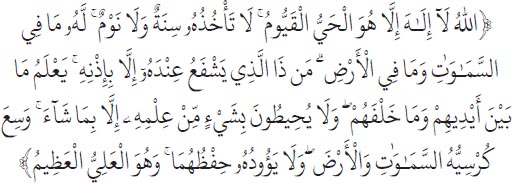
Allāhu lā ilāha illā Huwa-l-Ḥayyu-l-Qayyūm, lā ta’khudhuhū sinatun wa lā nawm, lahū mā fī-s-samāwāti wa mā fī-l-arḍ, man dha-lladhī yashfa‘u ‘indahū illā bi-idhnih, ya‘lamu mā bayna aydīhim wa mā khalfahum, wa lā yuḥīṭūna bi-shay’im-min ‘ilmihi illā bi-mā shā’, wāsi‘a kursiyyuhu-s-samāwāti wa-l-arḍ, wa lā ya’ūduhu ḥifẓuhumā, wa Huwa-l-‘Aliyyu-l-‘Aẓīm.
. . .and
“Your Lord is Allah, Who created the heavens and the earth in six days, then settled Himself on the Throne. He draws the night as a veil over the day, each seeking the other in rapid succession; and the sun, the moon, and the stars, (all) are subservient by His command. Verily, His are the Creation and the Command. Blessed is Allah, the Cherisher and Sustainer of the Worlds” [2].;
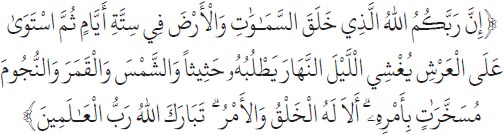
Inna Rabbakumu-llāhu-lladhī khalaqa-s-samāwāti wa-l-arḍa fī sittati ayyāmin thumma-stawā ‘alā-l-‘arshi yughshi-l-layla-n-nahāra yaṭlubuhu ḥathīthan wa-sh-shamsa wa-l-qamara wa-n-nujūma musakhkharātim bi-amrih, alā lahu-l-khalqu wa-l-amr, tabāraka-llāhu Rabbu-l-‘ālamīn.
. . .and to seek protection for her by means of the Mu‘awwidhatayn:
“Say: I seek refuge with the Lord of the dawn from the evil of created things, from the evil of darkness as it spreads, from the evil of those who blow on knots, and from the evil of an envier when he envies.” [3].

Qul A‘ūdhu bi-Rabbi-l-falaq, min sharri mā khalaq, wa min sharri ghāsiqin idhā waqab, wa min sharri-n-naffāthāti fi-l-‘uqad, wa min sharri ḥāsidin idhā ḥasad.
“Say: I seek refuge with the Lord of mankind, the King of mankind, the God of mankind, from the evil of the slinking whisperer, who whispers into the hearts of mankind, from jinn and men.” [4].

Qul A‘ūdhu bi-Rabbi-n-nās, Maliki-n-nās, Ilāhi-n-Nās, min sharri-l-waswāsi-l-khannās, alladhī yuwaswisu fī suḍūri-n-nās, mina-l-jinnati wa-n-nās.
References
[1] Qur’ān 2:255.
[2] Qur’ān 7:54. Ibn as-Sunnī (625).
[3] Qur’ān 113:1–5.
[4] Qur’ān 114:1–6.